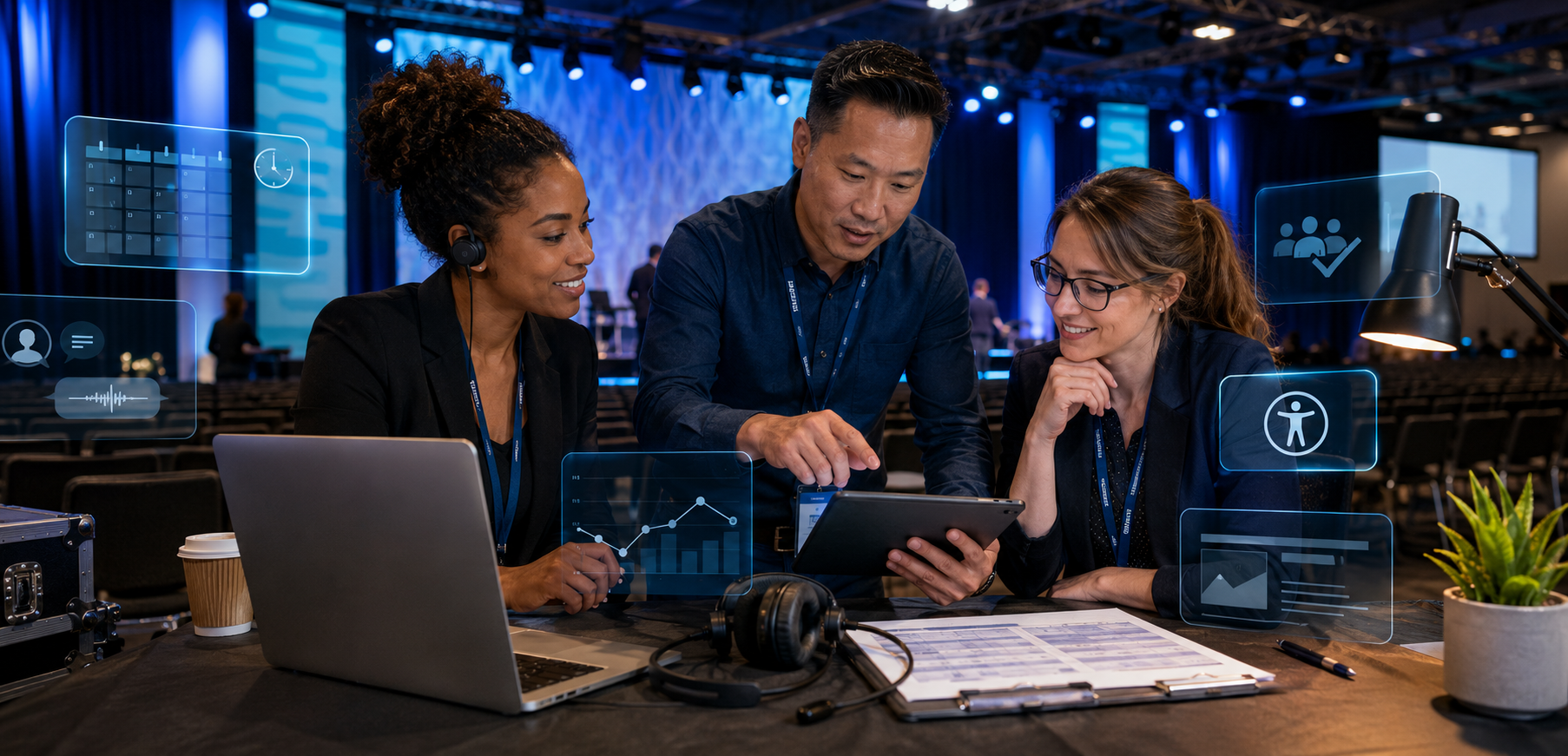
Artificial intelligence is no longer a future possibility for the meetings and events industry. It is already being used to plan conferences, create content, communicate with attendees, analyze engagement, and extend an event’s life long after it ends.
For nonprofits and associations, these tools can be especially valuable. Internal teams are often working with limited time, tight budgets, and a long list of responsibilities. AI can help reduce some of that workload. However, producing a successful event involves more than completing tasks quickly.
An event is a live experience connected to an organization’s reputation, audience, and mission. That still requires experienced people who understand strategy, production, and human behavior.
AI Has Become Part of Event Production
According to the 2026 Global Meetings and Events Forecast from American Express Global Business Travel, 50% of meeting professionals are integrating AI throughout event planning and execution.
That does not mean half of all events are being run by AI. It means event teams are beginning to use AI as a practical assistant throughout the production process.
The most effective uses are generally the ones that help people work faster, organize information, and make better-informed decisions.
How AI Can Help Before an Event
Much of the work involved in producing an event happens months before anyone takes the stage or logs into the virtual platform.
AI can help event teams:
- Develop early ideas for themes and session topics
- Create first drafts of speaker descriptions and attendee emails
- Organize registration information and survey responses
- Build preliminary schedules and production checklists
- Identify frequently asked attendee questions
- Personalize communications for different audience groups
These tools can provide a useful starting point, but the information still needs to be reviewed. An AI-generated agenda may look organized without accounting for speaker availability, production transitions, audience energy, or the time required to reset a stage.
That is where production experience becomes essential.
How AI Can Support the Live Event
During an in-person, virtual, or hybrid event, AI can support features such as live captioning, transcription, translation, attendee recommendations, and engagement tracking.
These capabilities can make an event more accessible and help organizers understand how attendees are participating. They can also help virtual and hybrid audiences find sessions or connections that are more relevant to them.
However, AI cannot take responsibility for the event.
It cannot recognize every subtle change in a speaker’s confidence, decide when a program needs to be adjusted, or manage an unexpected production issue with the calm judgment of an experienced team. If a microphone stops working, a video fails to play, or a presenter misses a cue, the response must be immediate and coordinated.
Those are human production decisions.
How AI Can Extend the Life of an Event
Some of AI’s most practical benefits happen after the event.
Recordings can be transcribed and organized more quickly. Long presentations can be reviewed for possible highlight clips. Session content can be repurposed into articles, social media posts, attendee recaps, or follow-up emails.
AI can also help analyze post-event surveys and identify patterns in attendee feedback.
This gives nonprofits and associations more opportunities to use the content they already invested in producing. Instead of allowing valuable presentations to disappear after one conference, organizations can continue educating and engaging their communities throughout the year.
Human review is still important. A short clip may be technically accurate but lack the context needed to represent the speaker or organization fairly.
Where Human Expertise Still Matters Most
Technology can support event production, but it cannot replace the people responsible for protecting the experience.
Event strategy
AI can suggest ideas based on existing information. It cannot fully understand why an event matters to an organization, what the audience needs, or how the experience should support a larger mission.
Those decisions must come from conversations with the organization and a clear understanding of its goals.
Speaker preparation
A successful presentation depends on more than the words on a slide.
Speakers need help with pacing, framing, lighting, sound, transitions, and confidence. Presenter technology checks and rehearsals allow the production team to identify problems before the audience sees them.
AI can create a checklist. A skilled producer can see when someone needs additional support.
Live production judgment
Events do not always follow the plan exactly. Speakers run long. Attendees ask unexpected questions. Technical issues happen.
Experienced producers know how to adjust without allowing the disruption to take over the event. That judgment comes from experience, preparation, and communication.
Human connection and trust
As AI-generated content becomes more common, authentic human interaction becomes more valuable. A 2026 PCMA industry survey found that building and maintaining relationships was the most frequently identified organizational priority.
People attend events to learn, but they also attend to connect, participate, and feel part of something meaningful. Technology should support those experiences, not distract from them.
The Best Approach Combines Technology and Experience
The question is not whether event teams should use AI. The better question is where AI can genuinely improve the process without reducing quality, accuracy, or trust.
Before using an AI tool, event teams should consider:
- Does it save time or improve the attendee experience?
- Who will review the information it produces?
- Does it protect attendee and organizational data?
- What is the backup plan if the technology fails?
AI is most valuable when it handles repetitive work, organizes information, and supports better decisions. Human experts should remain responsible for strategy, quality control, speaker support, live production, and the overall audience experience.
At JumpWire Media, our former TV producers bring broadcast-quality standards to nonprofit and association events. Our proven six-step process covers everything from the initial strategy and detailed production script to presenter technology checks, rehearsals, and event-day execution.
We use technology where it makes the event stronger, while keeping experienced people in control of the moments that matter.
Planning an in-person, virtual, or hybrid event and wondering how AI and professional production fit together? Schedule a free consultation with JumpWire Media to discuss your event, your audience, and your goals.